The average cost of junk removal is generally around $150 to $600 for many residential projects, although small pickups can start near $70 to $100 and larger jobs can reach $500 to $800 or more. These figures are useful as benchmarks, but they should not be treated as a guaranteed price for every property.
Key Takeaways
- Average junk removal prices vary substantially by project size and material type.
- A mid-sized residential load can fall within the broad $150–$600 range.
- Heavy materials can cost more even when they occupy less truck space.
- Regional labor and disposal costs can make averages different from one market to another.
What Is the Average Junk Removal Cost?
There is no single nationwide price that applies to every junk removal project.
For many residential jobs, the available pricing data places the average project within a broad $150 to $600 range. Smaller pickups may begin around $70 to $100, while larger truckloads or substantial cleanouts can reach approximately $500 to $800.
The reason for such a wide range is simple: “junk removal” describes many different types of projects.
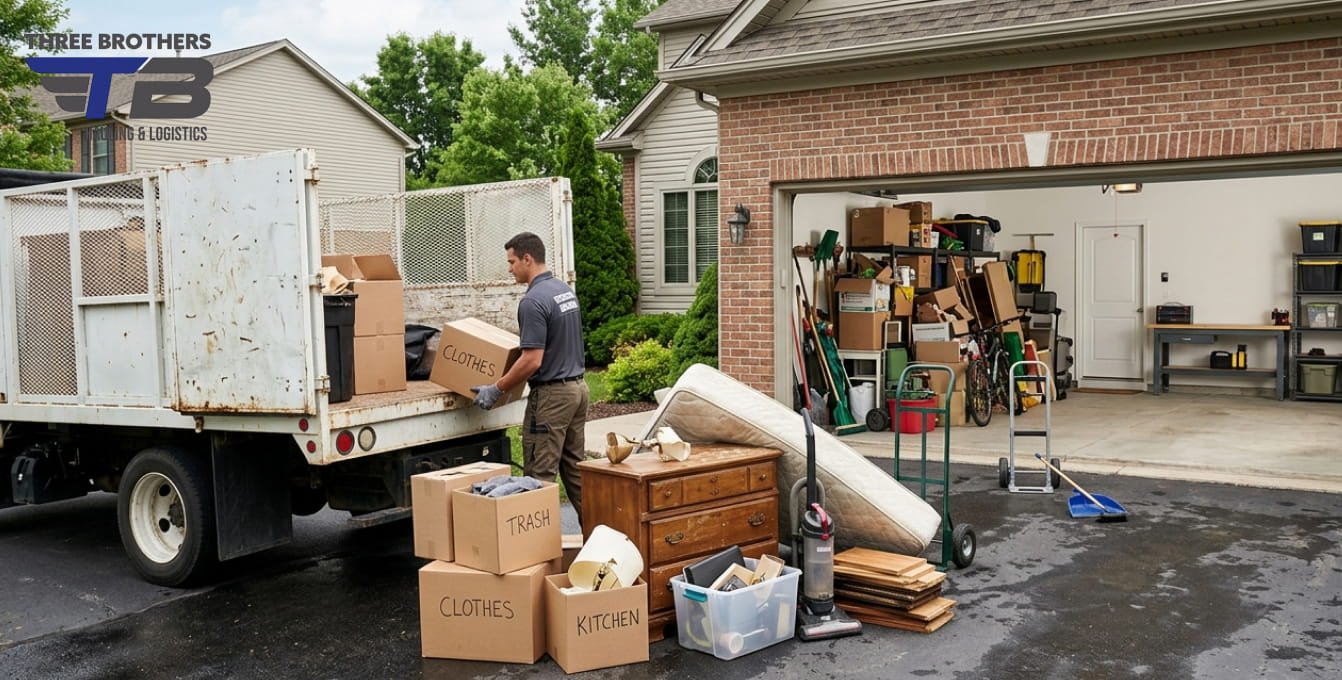
Removing a mattress and several boxes is a small job. Clearing a garage, basement, rental property, or estate is a completely different undertaking.
An average therefore works best as a budgeting benchmark rather than a promise of what an individual customer will pay.
Average Cost by Project Size
Project size is one of the clearest ways to understand average junk removal pricing.
| Project Size | General Price Range | Typical Situation |
| Minimum load | $70–$150 | Single item or small pickup |
| Quarter truck | $150–$250 | Small room or limited household clutter |
| Half truck | $300–$450 | Larger room or partial garage cleanout |
| Full truck | $500–$800 | Major cleanout or large volume |
These ranges come from the pricing information currently associated with the service’s existing cost content. Actual quotes can vary because the material’s weight, access, location, and disposal requirements may change the cost.
The table should therefore be used to understand the relative scale of projects rather than as a fixed price sheet.
Why the Average Price Can Be Misleading
A published average combines many different projects.
Suppose one customer needs a single sofa removed while another needs a garage emptied. Both jobs fall under “junk removal,” but they require very different amounts of truck space and labor.
The same issue occurs with construction debris. A load of lightweight household goods may fill a large portion of a truck without weighing much. Concrete, soil, brick, and similar materials can become heavy long before the truck is physically full.
This makes the average useful for setting expectations, but not precise enough to replace an individual estimate.
Average Cost Per Cubic Yard
Some customers prefer to think about junk removal in terms of truck volume or cubic yards.
Professional junk removal trucks commonly hold approximately 12 to 16 cubic yards. A volume-based pricing structure allows the hauler to estimate the customer’s charge according to the amount of space the material occupies.
This can be easier to understand than pricing every object individually.
For example, a collection containing furniture, boxes, bags, and household clutter can be measured according to the combined truck space it occupies rather than assigning dozens of separate prices.
The cubic-yard approach becomes less straightforward when the material is unusually heavy. Dense debris may require weight considerations in addition to volume.
Average Cost by Type of Project
Different project categories can produce very different averages.
Small Item Pickup
A small pickup may involve one appliance, one piece of furniture, a mattress, or a limited number of bags.
Because the overall volume is low, the customer may encounter a minimum service charge rather than a price calculated from a large load.
Room Cleanout
A bedroom, storage area, or small portion of a garage usually requires more truck space than a single-item pickup.
The final amount depends on how densely the material packs and whether the crew needs to remove everything from inside the property.
Large Cleanout
Whole-property cleanouts can involve significantly more material. Estate cleanouts, large garage projects, rental turnovers, and extensive decluttering can require a substantial portion of a truck or multiple trips.
These projects are therefore more likely to reach the upper end of typical residential pricing.
Why Raleigh Prices May Differ From National Averages
National averages do not automatically represent the price of junk removal in Raleigh.
Local labor costs, competition, disposal charges, fuel expenses, traffic, and the distance between properties and disposal facilities can all influence pricing.
For Raleigh homeowners, a local benchmark is more useful than relying exclusively on national averages. The dedicated junk removal cost page for Raleigh, NC focuses specifically on the local market.
This distinction matters because a national average can be technically accurate while still being a poor predictor of what a homeowner in a particular city will pay.
How Heavy Materials Affect the Average
Weight is one of the biggest reasons a project can fall outside an expected average.
Household clutter is usually bulky relative to its weight. Construction materials can be the opposite.
A half-full truck containing concrete, dirt, brick, or gravel may approach its safe weight limit despite leaving significant unused space.
This means customers should not estimate the price of heavy debris solely by looking at the amount of truck space it occupies.
Regional Differences in Junk Removal Prices
Junk removal prices can vary between cities and states because operating costs are not identical everywhere.
A market with higher labor costs or more expensive disposal facilities may produce higher prices than an area with lower operating expenses.
Local competition can also affect pricing. Where several providers operate in the same market, customers may have more opportunities to compare quotes.
For that reason, national averages should be treated as a starting point rather than a substitute for a local estimate.
How to Use an Average When Planning a Budget
A practical approach is to use the average as the first stage of budgeting.
Start by estimating how much material needs to be removed. Then consider whether the items are mostly lightweight household goods or unusually heavy materials.
Next, consider access. Items inside a home, upstairs, in a basement, or in another difficult location may require more labor than material already placed near the truck.
Finally, request an actual quote.
This process prevents a common mistake: assuming that an online average will match the final invoice exactly.
Average Cost vs. Your Actual Quote
The average answers one question:
“What do junk removal projects commonly cost?”
A quote answers a different question:
“What will this particular project cost?”
The second question requires information about the actual material, volume, access, location, and disposal requirements.
That distinction is important when comparing online pricing information.
What Should Be Checked Before Accepting a Quote?
A customer comparing the quoted amount with an online average should verify what is included.
Ask whether the price covers:
- Loading labor
- Transportation
- Standard disposal
- The estimated truck space
- Special handling
- Any additional charges
A quote that clearly explains these components is easier to compare with published averages than a number with no explanation.
Frequently Asked Questions
What is the average cost of junk removal?
Many residential junk removal projects fall within approximately $150 to $600, although small pickups can start lower and large projects can cost more.
What is the average cost of a full truckload?
A full truckload is commonly estimated around $500 to $800 based on the pricing data used for this article. Heavy or unusual materials can change the final amount.
Is junk removal cheaper for a small amount of junk?
Small projects generally require less truck space, but a minimum service charge can apply. As a result, the price does not always decrease in direct proportion to the number of items.
Does heavy junk cost more?
It can. Dense materials such as concrete, soil, and brick can reach weight limits quickly and may involve different disposal costs.
Are national junk removal averages accurate for Raleigh?
National averages provide general context, but Raleigh pricing can differ because local labor, disposal, fuel, traffic, and market conditions vary.
Why did my quote differ from the average online?
Online averages combine many types of projects. Your quote may differ because of the amount of material, weight, access, item type, travel, or disposal requirements involved in your specific job.
Final Thoughts
The average cost of junk removal is best understood as a range rather than a single number. Many residential projects fall around $150 to $600, while smaller pickups can begin near $70 to $100 and larger jobs may reach $500 to $800 or more.
Using these figures as a benchmark can help with initial budgeting. The most reliable way to determine the actual cost, however, is to have the specific volume, materials, access conditions, and disposal requirements evaluated before the job begins.